Living Labs allow you to test, improve, and validate solutions in real-world environments, with the participation of companies, government agencies, research centers, and end users. Discover how they work, the different types available, and why they have become a key element in accelerating innovation.
What is a Living Lab?
A Living Lab is an open and collaborative innovation environment in which companies, administrations, research centers and users participate in the design, development and validation of new solutions.
Unlike traditional laboratories, where testing is usually carried out under controlled conditions, Living Labs bring innovation to the context in which it will be applied.
This allows us to analyze not only whether a technology works, but also whether it is useful, whether it meets the needs of its users, whether it can be integrated with other tools, and whether it is ready to grow.
In this model, users are no longer simply recipients of a finished solution. They participate from the earliest stages, contribute their experience, and help adapt the technology to real-world usage conditions.
Therefore, a Living Lab combines four fundamental elements:
- Experimentation in real-world environments.
- User participation.
- Collaboration between different organizations.
- Evaluation and continuous improvement of solutions.
How does a living laboratory work?
Although each Living Lab is adapted to the sector and the project objectives, the process usually begins with the identification of a specific challenge .
This could involve reducing water consumption, improving urban mobility, optimizing an industrial process, developing a new sanitation service, or testing a digital tool.
Based on this challenge, the participating agents design an initial solution and deploy it in a real-world environment. During this phase, they may use sensors, digital platforms, communication systems, applications, connected devices, or data analysis tools.
The solution is evaluated over a set period to understand its performance and gather information. The technical results are combined with user feedback, allowing for the identification of limitations, the correction of errors, and the implementation of improvements.
The process is repeated iteratively until a more mature, useful solution is obtained, ready for implementation on a larger scale.
Who participates in a Living Lab?
One of the main strengths of Living Labs is their ability to connect profiles with different knowledge and objectives.
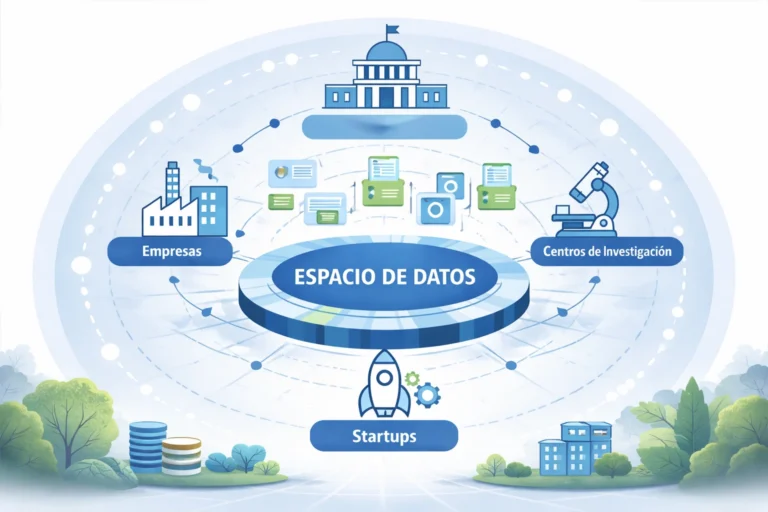
Technology companies provide solutions, development capabilities, and integration expertise. Research centers contribute scientific knowledge, methodology, and results analysis. Public administrations facilitate project coordination and alignment with local needs.
Universities, sector associations, startups, social organizations and specialized entities can also participate.
End users play a particularly important role. Their experience allows us to understand how a solution actually works outside of a controlled environment and what improvements it needs to adapt to their context.
This collaboration reduces the distance between research, technological development, and the market.
Examples of Living Labs
Living Labs are not limited to a single sector. Their methodology can be applied in any field where it is necessary to develop and validate solutions under real-world conditions.
Urban Living Labs
Urban Living Labs use the city as an environment for experimentation.
They can be used to test solutions related to mobility, lighting, waste management, air quality, energy efficiency or citizen participation.
For example, a city council can deploy new sensors in a specific area to test their functionality before extending the solution to the rest of the municipality.
This methodology allows us to evaluate the impact of technology on public services and on the experience of citizens.
Agri-food Living Labs
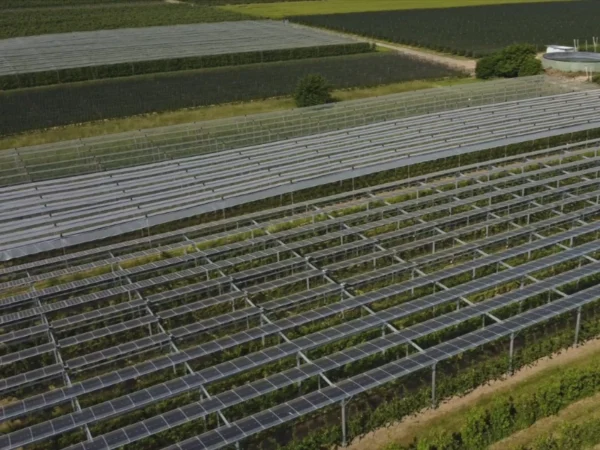
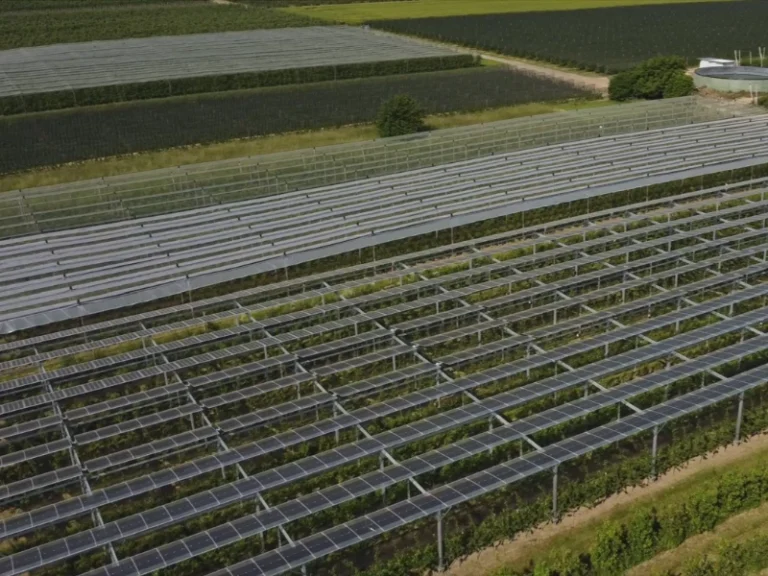
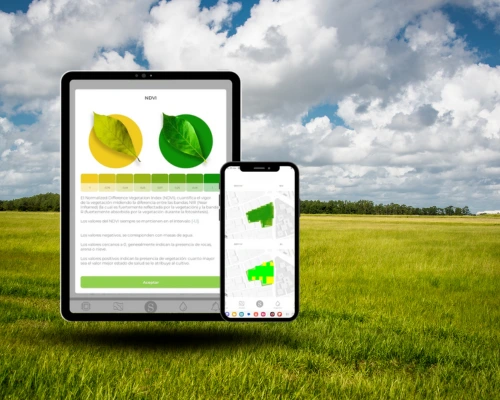
In the agri-food sector, living laboratories allow testing technologies related to crop monitoring, irrigation management, traceability, automation, or the efficient use of resources.
A farm can be transformed into an experimental environment through the integration of soil sensors, weather stations, IoT devices, and analytics platforms.
The data generated helps to evaluate solutions and develop decision support tools.
One example of this model is the TriRuralTech success story , based on the creation of a Living Labs infrastructure to generate, integrate, and utilize agronomic information in the Region of Murcia. Another great example is the European research project iCOSHELLs , which incorporates six living labs distributed across Europe and in which OdinS participates with sense4soils .
Industrial Living Labs
In industry, Living Labs allow the validation of technologies related to automation, robotics, predictive maintenance, or process control.
Testing in real-world facilities helps to understand the impact of solutions on productivity, safety, and efficiency.
They also allow the detection of integration problems with machinery, information systems, or operational processes before making larger investments.
Living Labs for Health
Healthcare Living Labs are used to develop and test medical devices, telehealth platforms, monitoring tools, or new care models.
In these settings, the participation of patients, healthcare professionals, and research staff is essential.
Their experience helps to evaluate aspects such as usability, security, accessibility and the adaptation of solutions to care processes.
Energy Living Labs
Energy Living Labs allow experimentation with self-consumption systems, energy communities, storage, smart grids, or monitoring tools.
These spaces facilitate the analysis of the behavior of solutions under real production and consumption conditions.
They also help to study user participation and the feasibility of new energy management models.
Educational and social Living Labs
The methodology of living laboratories can also be applied to education, accessibility, social inclusion, or citizen participation.
In these cases, innovation doesn’t necessarily have to be linked exclusively to a technology. It can also focus on new services, learning processes, or collaboration models.
An educational center, for example, can become an experimental environment to test new methodologies and analyze their impact on students and teachers.
What benefits do Living Labs offer?
The main value of a Living Lab is the ability to validate a solution before carrying out a large-scale deployment.
Testing in real-world environments allows for the detection of problems that would be unlikely to appear in a conventional laboratory. It also helps to verify whether the solution meets user expectations and generates the intended impact.
This model offers several benefits.
- Reduce the risk of innovation: Testing a solution in a limited environment allows you to identify errors, incompatibilities, or areas for improvement before making a larger investment.
- Improves user adaptation : User participation helps to design more practical, accessible solutions that are aligned with their needs.
- Facilitates collaboration: Living Labs create spaces where companies, administrations, research centers and users can share knowledge and infrastructure.
- Accelerate time to market: Validation in real-world conditions provides evidence of the solution’s performance and facilitates its evolution from a prototype to a commercial product or service.
- Generates knowledge: The data and experiences obtained during testing allow for a better understanding of the problem, evaluation of different alternatives, and the development of new projects.
- It promotes scalability: A Living Lab allows you to analyze whether a solution can be expanded to other spaces, users or sectors without losing effectiveness.
Data and open innovation in the Living Labs
Data is a central element in many living laboratories.
The deployed sensors, devices, and platforms generate information about the environment, the operation of the solutions, and user interaction.
However, simply collecting data is not enough. For data to generate knowledge, it must be structured , accessible , and combinable with information from other systems.
For this reason, interoperability is one of the major challenges for Living Labs. A standards-based infrastructure facilitates the integration of devices from different manufacturers and allows data to be reused in new applications.
It is also necessary to guarantee the security , availability and traceability of information, especially when several organizations are involved or when working with sensitive data.
Living Labs are part of an open innovation model in which knowledge is not generated within a single organization.
Companies, universities, administrations and users collaborate to solve common challenges and accelerate the development of new solutions.
This open approach allows for combining different capabilities. A company can contribute the technology, a research center can validate the results, and users can evaluate its practical application.
The result is an innovation process that is more connected to reality and less dependent on hypotheses made in controlled environments.
From experimentation to results
A Living Lab should not be understood as an isolated technological demonstration.
To generate value, you need clear objectives, continuity, and a direct connection to the needs of your environment. Your infrastructure must be prepared to evolve, incorporate new technologies, and support future projects.
When designed with this perspective, the living laboratory becomes a permanent platform for innovation.
In addition to validating solutions, it can serve to generate knowledge, promote technology transfer, attract projects, and create new opportunities for collaboration.
Its true potential lies in reducing the distance between an idea and its practical application.
From agriculture to cities, health, industry or energy, living laboratories are consolidating themselves as key tools to transform experimentation into applicable, scalable and impactful solutions.