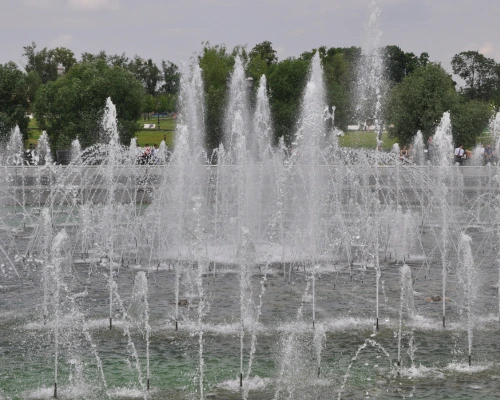
IoT-enabled ornamental fountains are transforming how city councils manage their urban facilities. Thanks to digitization and sensor technology, it’s now possible to monitor their operation in real time, improve maintenance, and optimize resources much more efficiently.
Below, we tell you 5 key reasons to modernize ornamental fountains with IoT technology.
1. Real-time monitoring of ornamental fountains using IoT
One of the main challenges in managing ornamental fountains is detecting problems early. When monitoring relies on on-site inspections or manual notifications, any malfunction can persist longer than desired and affect both the fountain’s operation and the appearance of the surrounding urban environment.
The integration of IoT technology allows for real-time monitoring of the operating status of each source. This enables responsible personnel to know whether a facility is operational, if a shutdown has occurred, if there is an anomaly, or if any parameter requires review. This immediate monitoring capability facilitates a faster response and helps reduce downtime, unnecessary travel, and more costly corrective actions.
2. Water quality control with smart sensors
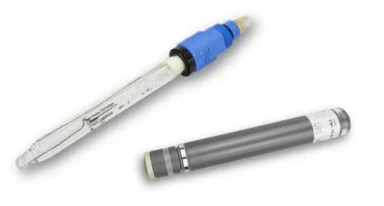
Water quality is essential for any ornamental fountain, both for operational reasons and for maintenance, hygiene, and the preservation of the installation itself. Without proper monitoring, minor imbalances can lead to major problems affecting the water’s appearance, equipment performance, and the need for more frequent maintenance.
Thanks to the installation of specialized sensors and data loggers like the IPex12G , it’s possible to continuously measure key parameters such as pH, oxidation-reduction potential (ORP), free chlorine levels, turbidity, temperature, and electrical conductivity. Having this information in real time allows for much more precise management, based on data rather than estimates, improving technical control and the ability to anticipate potential deviations before they become incidents.
3. Remote management of ornamental fountains with IoT to gain efficiency in municipal service
Modernizing ornamental fountains not only provides more information but also greater control. A remote management system allows for the centralized operation of multiple installations from a single platform, simplifying daily tasks and facilitating decision-making.
Switching systems on and off, scheduling, monitoring status, checking alarms, and reviewing historical data can all be managed remotely, eliminating the need for manual processes. For a city council, this translates into more streamlined operations, better planning of technical work, and more efficient use of available resources. In other words, less time spent on repetitive tasks and more time to focus efforts on high-value activities.
4. Smarter maintenance and fewer unexpected incidents
Often, the greatest cost lies not in routine maintenance, but in the urgent interventions that arise after a breakdown has already occurred. Digitalization helps shift this reactive model to a more proactive one, where warning signs arrive earlier, allowing for more timely action.
When a water source has continuous monitoring and connected sensors, it becomes easier to identify abnormal behavior, detect operational deviations, and prioritize interventions more efficiently. This improves the upkeep of the installation, reduces the likelihood of unexpected breakdowns, and promotes more organized municipal maintenance management.
Furthermore, having historical data and traceability facilitates the technical analysis of each installation and helps to make decisions with a more complete view, something especially useful when managing several sources spread across different points of the municipality.
5. New possibilities for the city’s image and the revitalization of public space
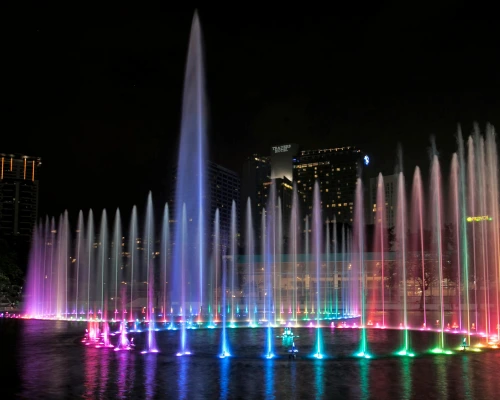
Modernizing an ornamental fountain with IoT not only improves the technical aspects. It also opens the door to a new way of understanding these spaces within the city. The remote automation of lighting and sound systems allows for the design of more attractive displays, the adaptation of scenes to different times of the year, and the reinforcement of the symbolic and experiential value of particularly representative urban locations.
In certain areas, a modernized fountain can become a meeting point, a resource for cultural activities, or even a tourist attraction. The combination of water features, lighting, and sound, managed by automated and remote systems, allows for the creation of more impactful experiences without sacrificing technical control or operational efficiency. This approach helps to enhance public spaces and project an image of an innovative, well-maintained municipality focused on providing better environments for residents and visitors.
Modernizing water sources is a step towards smarter urban management.
Modernizing IoT-enabled ornamental fountains presents an opportunity for municipalities to improve the control, efficiency, and value these installations bring to public spaces. At OdinS, we help local governments take this step through real-time monitoring solutions, water quality control, remote management, and automated on/off switching.
This progress is also part of a broader trend of digitizing urban services, as outlined by the European Commission in its approach to smart cities and communities.
If you want to learn how to implement this technology in your municipality, contact us and we will inform you without obligation.