Avian botulism poses a critical environmental threat to the wetlands of the Region of Murcia. This disease can cause mass mortality events in waterfowl, particularly affecting protected and vulnerable species such as the white-headed duck and the marbled teal.
The risk increases in certain aquatic ecosystems where environmental conditions can favor the growth of the bacteria responsible for botulism. In this context, naturalized wetlands associated with wastewater treatment plants require continuous monitoring, as small variations in parameters such as temperature, dissolved oxygen, or conductivity can indicate potential risks.
The main challenge was to move from a reactive management, based on detecting the problem when it has already occurred, to a preventive model capable of anticipating scenarios favorable for the appearance of outbreaks.
Technology implemented
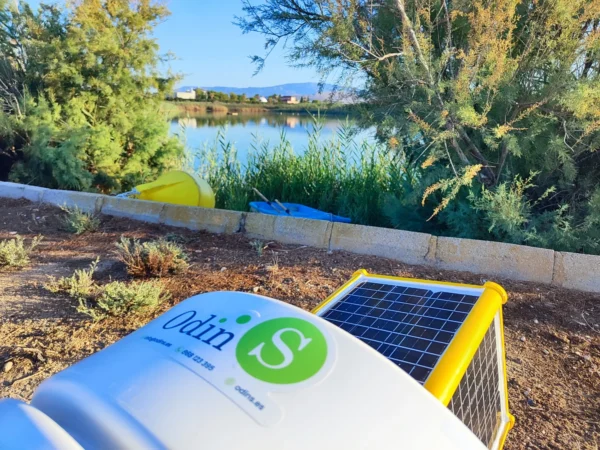
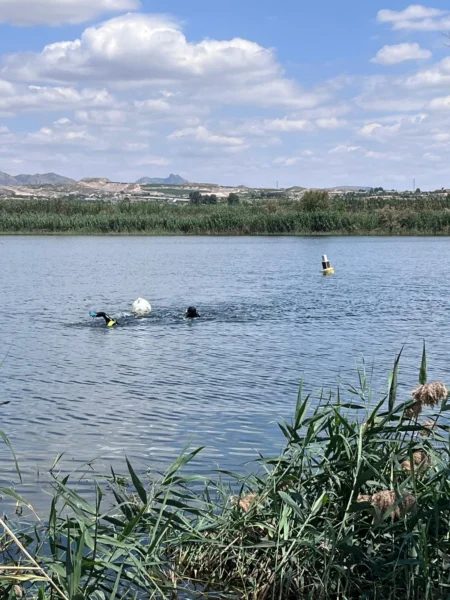
To address this challenge, an intelligent real-time monitoring system has been developed and installed in naturalized lagoons of the wastewater treatment plants of Mazarrón, Alhama de Murcia and Molina de Segura.
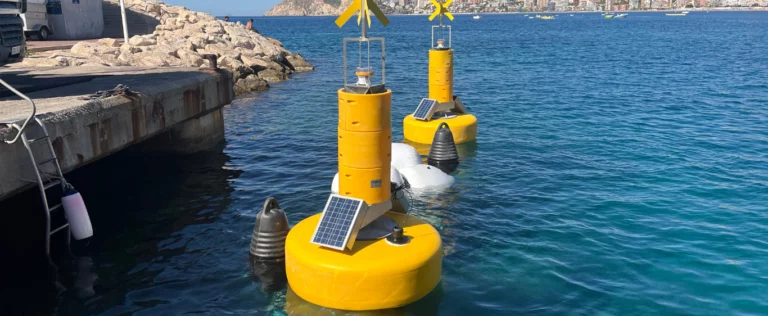
The solution is based on the installation of autonomous, solar-powered buoys equipped with multiparameter probes capable of continuously recording key water quality variables, including:
- Water temperature
- Dissolved oxygen
- Conductivity
- Other relevant physical-chemical parameters for environmental risk assessment.
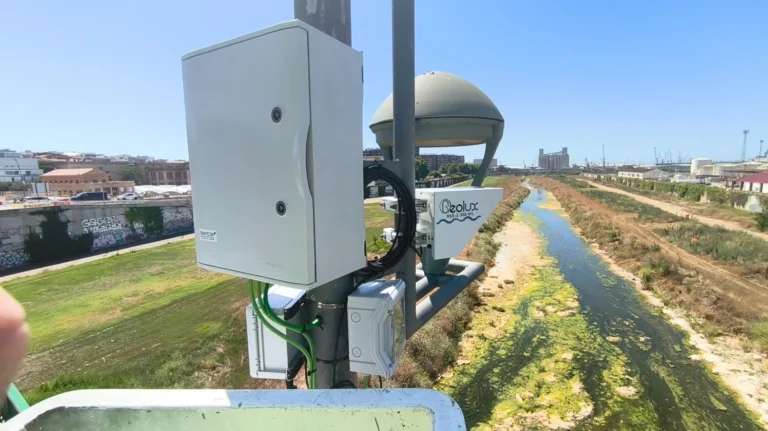
The data collected by the probes is automatically sent to a digital monitoring platform , where it can be viewed in real time and analyzed centrally.
The system allows for the configuration of early alerts when conditions are detected that indicate an increased risk of the bacteria that causes avian botulism. This enables the responsible teams to make data-driven decisions and take action before the problem escalates into an outbreak.
Result
The implementation of this system represents a significant advance in the preventive management of wetlands and sensitive aquatic areas.
Thanks to continuous monitoring, it is possible to detect risk situations early and activate water management measures more quickly and accurately . This reduces the likelihood of avian botulism outbreaks, protects vulnerable species, and improves the response capacity to critical environmental events.
The project contributes directly to a smarter, more sustainable and preventative management of aquatic ecosystems, integrating IoT technology, solar energy and data analysis to serve the conservation of biodiversity.