In an increasingly connected world, urban digital twins They are becoming key tools for the design, monitoring, and smart management of our cities. Combined with technologies of Artificial intelligence , these models allow the transformation of urban environments into safer, more sustainable and efficient spaces .
What is an urban digital twin?
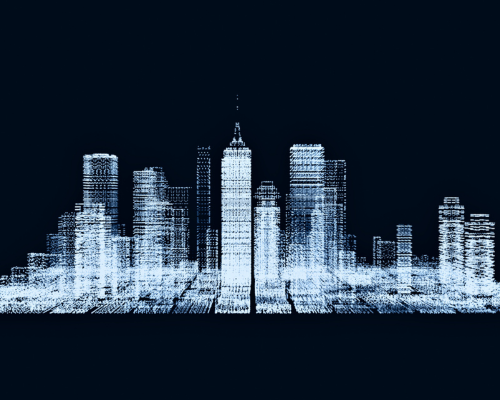
An urban digital twin is a real-time virtual replica of a city, infrastructure, or urban network. This digital model uses constantly updated data from sensors, cameras, weather stations, and other connected devices to simulate the behavior of the physical environment, allowing for predictive behavior, virtual testing, and optimized operations— all without altering the physical space.
Unlike a simple 3D model, a digital twin is dynamic and interactive : it reflects changes occurring in the city and enables data-driven decision-making . When integrated with AI, it becomes a powerful platform for prediction, automation, and response to critical events.
Applications of digital twins in urban management and security
The implementation of digital twins is revolutionizing different areas of urban management. These are some of the most relevant applications:
1. Predictive monitoring
AI analyzes behavioral patterns in the city (mobility, traffic, weather, human behavior) to anticipate risks such as: congestion, accidents or emergency situations.
2. Emergency simulation
It allows for the virtual recreation of evacuation scenarios, floods, fires, or structural collapses , helping authorities to prepare more effective protocols and train their teams.
3. Critical infrastructure management
Systems such as street lighting, traffic lights, surveillance cameras, electrical networks or environmental sensors can be monitored in real time and controlled remotely.
4. Analysis of urban mobility and behavior
Identifying bottlenecks, traffic patterns, or high-density areas allows for improved road safety and optimized public transport.
5. Smart waste management
Thanks to fill sensors and optimization algorithms, collection routes can be redesigned to reduce emissions, costs, and inconvenience to citizens .
6. Automated response
Digital twins can activate real-time security protocols : turn on lighting in sensitive areas, close access points, issue alerts, or coordinate with emergency services.
7. Police and emergency coordination
The platforms can be integrated with local police systems and emergency services, sharing information in real time for faster and more accurate action.
8. Environmental monitoring
Continuous measurement of pollution, noise, temperature, air and water quality , essential for public health and urban sustainability .
9. Maintenance of green spaces and smart irrigation
Sensors in parks and gardens allow irrigation to be adjusted based on soil moisture and weather forecasts, reducing water consumption and improving maintenance.
Cities like Singapore , Helsinki , and Barcelona are already using digital twins to improve urban planning, mobility, energy efficiency, and emergency management. These initiatives demonstrate that this is not a future promise, but a mature and expanding technology .
Due to their potential to improve operational efficiency and competitiveness in various sectors, digital twins are one of the technological strategies included in the Digital Spain Agenda and in the Recovery, Transformation and Resilience Plan of the Government of Spain.
Cybersecurity challenges in digital twins
The adoption of digital twins also entails cybersecurity risks , especially in urban environments where any failure can have a direct impact on citizens. According to INCIBE , these are some of the main threats that must be taken into account:
Main threats:
Data manipulation : The intentional alteration of real-time data can lead to erroneous decisions with operational consequences.
Vulnerabilities in IoT devices : Poorly configured sensors and connected systems can be an entry point for cyberattacks.
Denial of service (DoS) attacks : These can block communication between system elements, affecting their functionality.
Heterogeneous infrastructure : Composed of a variety of technologies and manufacturers, the infrastructure presents significant challenges in management and maintenance, as each component may require specific resources that, over time, may become obsolete or incompatible with already integrated systems or future deployments. To meet this challenge, OdinS devices work with open data and are interopable , that is, compatible with third-party technologies.
Recommended measures:
Implement continuous monitoring and real-time threat detection.
Use encrypted protocols and strong authentication to protect data.
Apply network segmentation to contain threats in case of intrusion.
Properly manage the lifecycle of IoT devices.
Promote cybersecurity training and awareness at the institutional level.
Ensuring the cybersecurity of digital twins is not optional: it is an essential requirement for their proper functioning and to preserve public trust in digital public systems.
The future: smart, data-driven cities
The combination of urban digital twins with AI marks a turning point in the digital transformation of cities . These systems offer a comprehensive and integrated view that allows administrations to make more agile, informed, and sustainable decisions .
Furthermore, they promote public policies focused on improving the quality of life of citizens and the efficiency in the management of resources.
Talk later?
Discover our smart city solutions or contact us through our contact page.