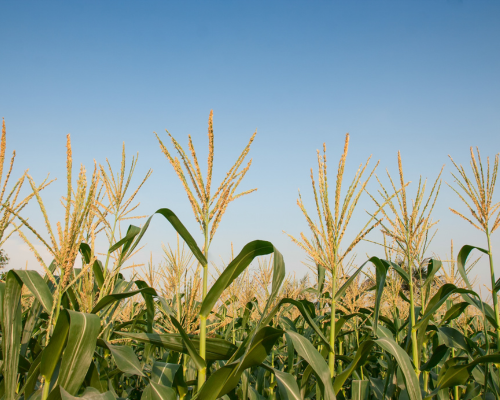
Agricultural sensors allow the measurement of key variables of the soil, climate and crop to improve irrigation, anticipate risks and make more precise decisions in precision agriculture.
Agricultural sensors: key to more precise farming
Precision agriculture increasingly relies on the continuous measurement of soil, environmental, and crop variables. In this context, agricultural sensors have become an essential tool for improving decision-making, optimizing irrigation, anticipating risks, and gaining a more detailed understanding of what is happening in each plot.
Thanks to these technologies, it is possible to transform data into useful information for agronomic management. From soil moisture to solar radiation, including leaf wetness and weather conditions, each sensor contributes an important part of the production context.
In this article we review the main types of agricultural sensors, how they work and what applications they have in the field.
What are agricultural sensors and what are they used for?
Agricultural sensors are devices designed to measure physical or environmental variables relevant to crop development. Their main function is to provide objective and continuous data that helps to better interpret soil conditions, weather patterns, and certain agronomic risk factors.
Their practical applications are very broad. They allow, for example:
- to know the water content in the soil,
- assess the crop’s water stress,
- monitor weather conditions,
- improve irrigation scheduling,
- detect environments conducive to disease,
- and feed agronomic models or alert systems.
In other words: they help replace intuition-based decisions with data-based decisions.
Soil sensors
Soil sensors allow the measurement of key variables related to water availability and soil profile conditions. Among the most widely used technologies are high-frequency capacitance probes.
High-frequency capacitance probes
Capacitance probes are a widely used solution in agriculture for measuring water behavior in the soil. Their operating principle is based on detecting changes in the soil’s dielectric constant or permittivity, a property that varies primarily depending on its water content.
How does capacitance work?
The measurement is performed by generating a high-frequency electric field around the sensor. This field expands from the access tube into the surrounding soil. As the amount of water in the soil changes, the dielectric response detected by the sensor also changes.
At high frequencies, the signal is predominantly affected by water molecules. In practical terms, the greater the amount of water present in the soil, the greater the effect on the measurement between the sensor’s two metal rings.
This principle allows for continuous monitoring of the water status of the profile and observation of water dynamics after irrigation, rain, or a period of high evaporative demand.
What variables can they measure?
Depending on the model, these probes can measure:
- Volumetric soil moisture (% VWC)
- Soil temperature (°C)
- Electrical conductivity of the soil (dS/m)
These variables are especially valuable for interpreting how water is distributed in the profile, how soil temperature evolves, and how certain conditions related to salinity or soil solution change.
Installation types: multilevel probes and point sensors
There are two main formats for performing these measurements.
Multilevel probes
In this case, a single probe provides readings at different soil depths, typically every 10 cm. This format is very useful for analyzing the vertical distribution of moisture and seeing how water moves within the soil profile.
Multilevel probes allow, for example, the detection of whether irrigation is reaching the desired depth or whether losses are occurring due to deep percolation.
Point sensors
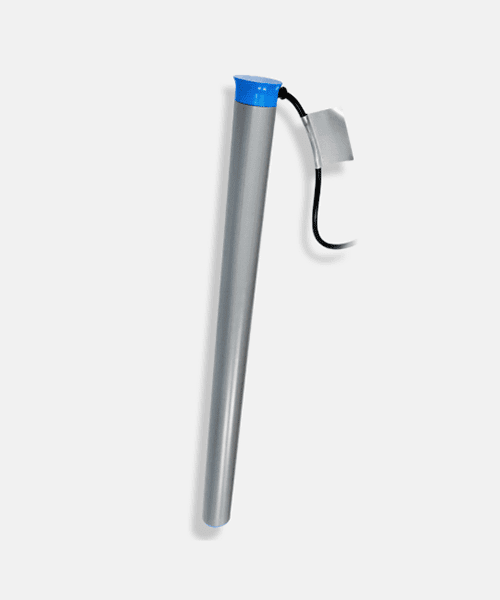
Point sensors are placed at specific depths in the ground by excavating a profile. They are an interesting option when you want to monitor a specific area with greater installation flexibility.
This format allows the placement to be adapted to the particularities of the soil, the crop or the root system.
Tensiometers for measuring matrix potential
In addition to measuring moisture, in many agronomic situations it is essential to know how easily the plant can extract water from the soil. For this purpose, tensiometers are used, instruments designed to measure the soil’s matric potential, expressed in kPa.
How does a blood pressure monitor work?
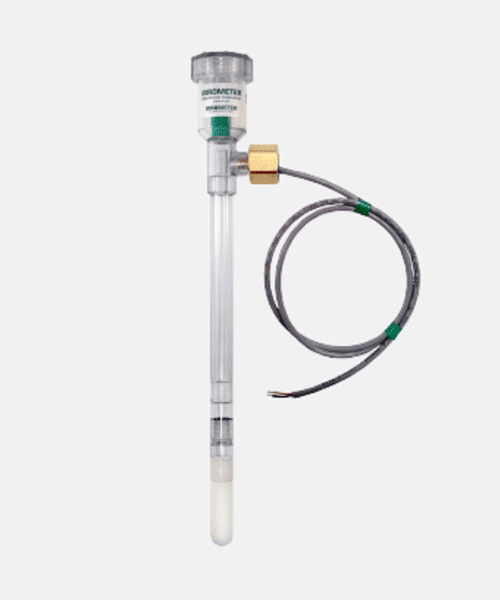
The tensiometer measures the vacuum generated inside the instrument when water moves through a porous capsule until it reaches equilibrium with the soil moisture.
Its operation is based on two main components:
- A porous ceramic capsule in direct contact with the ground
- An internal hydraulic system that transmits pressure to a pressure sensor
When the soil dries, water tends to move out of the tensiometer through the porous capsule. This movement creates a vacuum inside the device, which is registered by the pressure sensor. In this way, a measurement of the matric potential is obtained.
Why is this measurement important?
Matric potential is especially useful for establishing irrigation thresholds based on crop water stress. Unlike other sensors that indicate how much water is in the soil, the tensiometer helps to understand how much energy the plant must expend to absorb that water.
Therefore, it is a very valuable tool for more precise and physiologically relevant irrigation scheduling.
Environmental and meteorological sensors
Crop performance depends on more than just the soil. Atmospheric conditions directly influence evapotranspiration, disease risk, heat stress, frost, and other key processes. Various types of environmental and meteorological sensors are used to monitor these variables.
Multiparameter weather stations
Agricultural weather stations allow the simultaneous recording of multiple atmospheric variables using sensors integrated into the same equipment.
Among the parameters they can measure are:
- Solar radiation (W/m²)
- Precipitation (mm/h)
- Ambient electrical conductivity
- Relative humidity of the air (%)
- Air temperature (°C)
- Vapor pressure (kPa)
- Barometric pressure (kPa)
- Horizontal wind speed (m/s)
- Wind gust (m/s)
- Wind direction (°)
- Sensor tilt (°)
- Lightning count
- Average distance of electrical discharges (km)
- Dew point
Applications in agriculture
These stations allow for a more precise characterization of the crop environment and generate useful information for:
- agronomic models,
- alert systems,
- local weather monitoring,
- analysis of the risk of adverse events,
- and support for irrigation, protection or management decisions.
In technologically advanced agricultural operations, having your own meteorological data greatly improves the ability to interpret data compared to the exclusive use of general stations or stations located far from the plot.
Leaf moisture sensors
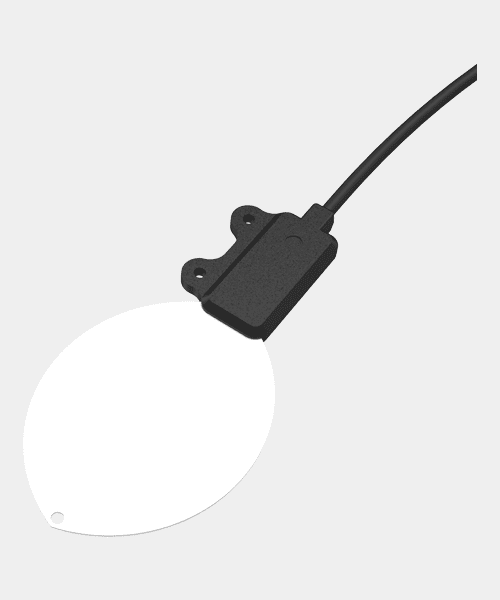
Leaf surface moisture is a critical factor in the development of certain diseases and in assessing specific microclimatic conditions. Leaf moisture sensors are used to measure it.
How do they work?
The measurement is performed using a capacitance-based dielectric method. The sensor detects changes in the dielectric constant caused by the presence of water, dew, or ice on its surface.
These sensors are designed to mimic a real leaf, so that water condenses or evaporates on them in a similar way to how it would on a crop leaf.
What can they monitor?
- Leaf moisture (%)
- Icing
What are they for?
The information they generate is especially useful in two areas:
- Prediction models for fungal diseases
- Frost risk assessment
In other words, they help anticipate times when the crop may be exposed to conditions favorable for infections or cold damage.
Solar radiation sensors
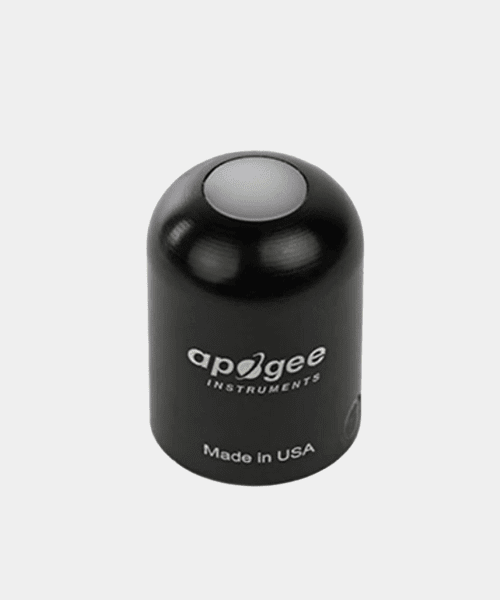
Solar radiation is a fundamental variable in many agronomic processes, as it influences the energy available to crops and various environmental dynamics. Pyranometers, instruments designed to record incident solar irradiance, are used to measure it.
Silicon cell pyranometers
These sensors use a silicon photocell that converts solar radiation into an electrical signal proportional to the irradiance.
Measured parameter:
- Solar radiation (W/m²)
This type of sensor is commonly used when seeking an efficient and operational measurement of solar radiation.
Thermopile pyranometers
Thermopile pyranometers use thermoelectric sensors that detect the temperature difference produced by incident solar radiation.
Measured parameter:
- Solar radiation (W/m²)
This type of instrument stands out for offering radiation measurements with high stability and precision, making it especially useful in applications where data quality is critical.
Advantages of combining soil and climate sensors
Each technology measures a part of the agricultural system. However, the greatest value emerges when the data are integrated and interpreted together.
For example, soil moisture can indicate how much water is available, but temperature, solar radiation, ambient humidity, and wind help to understand atmospheric demand and the context in which the crop is growing. Similarly, matric potential provides a distinct and complementary perspective to the simple measurement of volumetric moisture.
The combination of sensors allows:
- improve irrigation management,
- detect stressful situations more accurately,
- feed agronomic models,
- anticipate health or climate risks,
- and make decisions more closely aligned with the actual behavior of the crop.
With Ingrovia , we provide the customer with a wide range of OdinS certified sensors with the aim of adapting the solution to the specific needs of the operation.
Conclusión
Agricultural sensors are a key tool for moving towards more precise, efficient, and data-driven agriculture. Whether they are soil sensors, capacitance probes, tensiometers, weather stations, leaf wetness sensors, or pyranometers, each technology provides valuable information for a better understanding of what is happening in the field.
Sensor technology is not just about collecting data, but about transforming that data into agronomic criteria. And the better we understand the soil, climate, and crop, the better decisions we can make.
Frequently asked questions about agricultural sensors
What are agricultural sensors?
Agricultural sensors are devices designed to measure soil, environmental, and crop variables. Their function is to provide objective data that helps improve decision-making in areas such as irrigation, crop monitoring, and agronomic risk assessment.
What do soil sensors measure?
Soil sensors can measure different variables depending on the model. Among the most common are volumetric soil moisture, temperature, and electrical conductivity. Some devices also allow readings to be obtained at various depths within the soil profile.
How do capacitance probes work?
Capacitance probes generate a high-frequency electric field around the sensor. This field detects changes in the soil’s dielectric constant, which are primarily related to the amount of water present. Therefore, they are widely used for monitoring soil moisture.
What does a blood pressure monitor measure?
A tensiometer measures the soil’s matric potential in kPa. This value indicates the force the plant must exert to extract water from the soil, making it particularly useful for defining irrigation thresholds based on crop water stress.
What is the purpose of an agricultural weather station?
An agricultural weather station allows for the monitoring of environmental variables such as air temperature, relative humidity, precipitation, wind, barometric pressure, and solar radiation. This information helps to better understand the conditions of the crop’s environment and to feed into agronomic models or early warning systems.
What is the use of leaf moisture sensors?
Leaf moisture sensors detect the presence of water, dew, or ice on a surface that mimics the behavior of a real leaf. They are especially useful for predicting fungal diseases and assessing frost risk.
What is a pyranometer?
A pyranometer is an instrument designed to measure incident solar radiation. In agriculture, this data is very useful for better understanding the environmental conditions of the crop and complementing the information obtained by other agricultural sensors.
Why is it beneficial to combine soil sensors and climate sensors?
Because they allow for a more complete view of the soil-crop-atmosphere system. By combining soil and climate data, it is possible to better adjust irrigation, more accurately interpret crop status, and anticipate agronomic risks.